
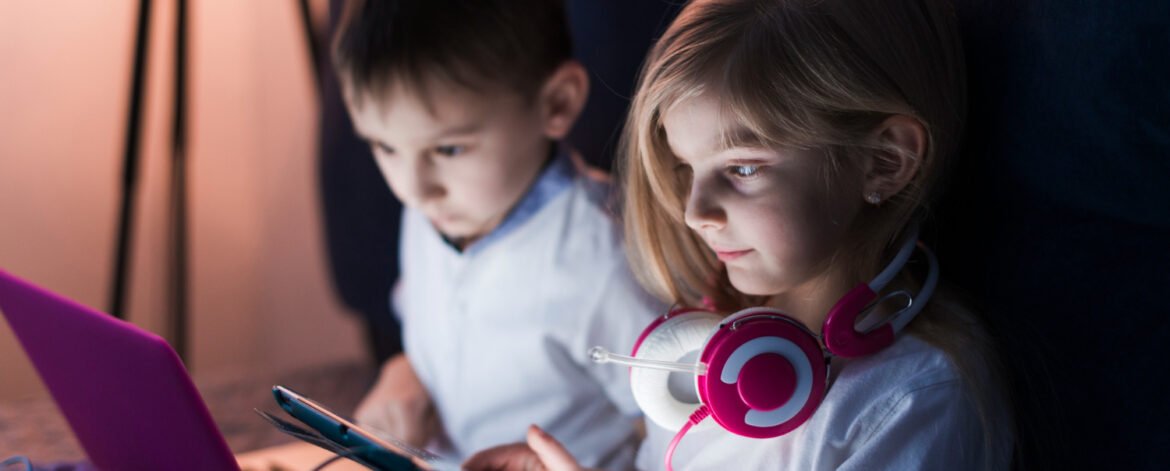
Engaging Alternatives to reduce screen time for kids
Screens have quietly woven themselves into every part of a child’s day, study time or even meal time. While technology offers learning and convenience, parents often worry about its growing presence. Too much screen exposure can make children more restless, reduce social interaction, and limit their ability to think creatively. But reducing screen time doesn’t have to feel like punishment. The best approach is to replace screen-based activities with real-world experiences that are fun, meaningful, and easy to set up.
Invite kids into everyday life
One of the simplest ways to reduce screen time is by involving children in ordinary routines. Kids love feeling like they’re part of “grown-up” work. Helping in the kitchen, watering plants, organising their books, or packing their school bags gives them a sense of ownership and keeps their minds engaged. These seemingly routine activities build independence and help children learn through participation rather than instruction.
Encourage creative expression
Creative play is another gentle way to shift attention away from screens. Cutting colourful paper, painting freely, moulding clay, or stitching simple shapes allows children to explore colours, textures, and ideas. The goal is never to create something perfect; it’s about the joy of expressing themselves.
Rediscover the joy of stories
Reading, in any way, can be a powerful screen-free activity. Storybooks, picture books, comics, riddles, and magazines all offer mental stimulation. Children who find reading difficult may enjoy audiobooks or family storytelling sessions. When children are transported into another world through words, imagination takes charge, helping their mind grow in ways that visual screens cannot.
Let the outdoors do its magic
Outdoor play remains unmatched in helping children unwind and reset. Running, cycling, or simply wandering in the park helps them connect with nature. Hearing birds, feeling the wind, stepping on grass, these sensory experiences reduce restlessness. Whether it’s playing with neighbourhood friends or simply exploring their surroundings, the outdoors offers stimulation that refreshes body and mind.
How does Falling Apple help?
Not every parent can constantly design new activities, and that’s okay. Children don’t need elaborate setups; they simply need opportunities to explore, try, fail, and try again. What they truly seek is engagement, not entertainment. This is where structured programs can play a powerful role. Hands-on learning environments give children space to experiment, create, and understand how things work in the real world. They build resilience, curiosity, confidence, and problem-solving skills, qualities that screen alone cannot nurture
Conclusion
Reducing screen time is not about saying “no” to devices. It’s about helping children discover that fun exists outside the screen, in the kitchen, in the garden, in stories, in music, in the workshop, and in the world around them. If you’d like your child to explore, build, and imagine beyond the screen, Falling Apple is here to help. Let’s raise thinkers, builders, and joyful learners.
Here are some fascinating stories of scientists who stumbled upon discoveries that changed the world.
Newton’s Falling Apple
Sometimes asking “WHY” helps you find the right answer!
The story goes that Isaac Newton was sitting under an apple tree when he saw an apple fall to the ground. Millions of people had seen apples fall before but Newton asked a different question: Why does it always fall and not sideways or upwards?
That simple moment sparked his thoughts on gravity, one of the most important scientific ideas ever. It wasn’t just the apple; it was Newton’s curiosity that turned an everyday event into a scientific breakthrough.
Fleming’s forgotten Petri Dish
Sometimes making a mess can help in creating extraordinary events!
In 1928, Alexander Fleming discovered a mould growing in one of his Petri dishes after leaving it there the night before in his messy laboratory. Surprisingly, the mould had killed the bacteria around it.
Rather than discarding it, Fleming investigated it and found the first real antibiotic, penicillin. Millions of lives around the world have been saved by this accident.
Percy’s melted chocolate and the discovery of microwave
Sometimes paying attention to little things around you can save your day!
Percy Spencer, an engineer, was working on radar technology during World War II. One day, while standing near a magnetron (a type of vacuum tube), he noticed that a chocolate bar in his pocket had melted.
Instead of being annoyed, he tested it with popcorn kernels and an egg. The result? The invention of the microwave oven – a kitchen essential today!
Spencer’s weak glue and Post-it notes
Sometimes even your failed ideas can lead to a new perspective
Dr. Spencer Silver, a chemist at 3M, was trying to make a super-strong adhesive. What he got instead was a weak glue that could stick paper lightly without leaving marks.
At first, it seemed useless. But years later, a colleague used it to mark pages in his choir book and Post-it Notes were born. Today, they’re used in schools, offices, and homes around the world.
An invention that became a child’s play
In the 1950s, Kutol Products made a non-toxic paste to clean soot from wallpaper. But as coal heating faded, demand for the cleaner dropped.
Just when the company risked losing its main product, a family member suggested a playful twist: let kids shape and mould with it instead. That simple idea turned a fading business tool into one of the most beloved children’s toys – Play-Doh.
Conclusion
These moments could have been ignored. But because these scientists were ready to explore, accidents turned into world-changing discoveries.
At Falling Apple, we believe every child has the potential to be a little Newton, Fleming, or Spencer. Our hands-on science activities are designed to let kids experiment, fail, and try again, because that’s how real discoveries happen.
Every mistake is a step towards discovery. Visit Falling Apple, Adyar, Chennai or call +91 81100 66113 to book a session.